Key Takeaways
- Dubai recorded 9.68 million international overnight visitors in January–October 2026, down approximately 38.3% year-on-year from 15.70 million in January–October 2025 (DET / Dubai Media Office).
- October 2026 reached 1.15 million international overnight visitors—the highest monthly total since February 2026—representing a late-year monthly recovery within 2026 rather than annual year-on-year growth.
- DET continues targeting visitor recovery through source-market diversification, airline and trade partnerships, major events, and repeat-visit programmes including A Dubai Invite and Dubai Access Club.
- Lower annual visitation underscores why property investors cannot rely on tourism headlines; hospitality-linked units and short-term rentals face heightened sensitivity to occupancy and seasonal demand.
- Disciplined real estate underwriting focuses on acquisition pricing, competing residential and hotel supply, DET holiday-home licensing, RERA service charges, net rental yield, and resale liquidity.
Article Contents (19 Sections)
Tourism metrics are closely tracked across Dubai’s hospitality and short-stay sectors, making clear context vital when assessing Dubai Tourism 2026. Data released by the Dubai Department of Economy and Tourism (DET) at its 2026 City Briefing and reported via the Government of Dubai Media Office shows Dubai welcomed 9.68 million international overnight visitors in January–October 2026—an approximately 38.3% year-on-year decrease from the 15.70 million international overnight visitors recorded in January–October 2025.
Within 2026, DET reported a sequential autumn pickup: 1.15 million international overnight visitors arrived in October 2026, the highest monthly total since February 2026. Distinguishing that monthly rebound from the ten-month annual decline is essential when evaluating real estate exposure.
Headline visitor figures neither guarantee price appreciation in peak years nor automatically dictate residential values during softer periods. Property outcomes depend on supply, entry pricing, operating costs, licensing compliance, and broader residential demand.
Dubai Tourism 2026 Figures: 9.68 Million Visitors vs. 15.70 Million in 2025
Accurate analysis compares DET’s 2026 ten-month tally against the equivalent 2025 period in official DET Tourism Performance Reports and Emirates News Agency (WAM) dispatches:
- Jan–Oct 2025 Benchmark: 15.70 million international overnight visitors over the first ten months of 2025.
- Jan–Oct 2026 Total: 9.68 million international overnight visitors over the same ten months of 2026—roughly 6.02 million fewer visitors, or an ~38.3% decrease.
- October 2026 Monthly Context: 1.15 million international overnight visitors in October 2026 (highest monthly total since February 2026), reflecting sequential monthly recovery within autumn 2026 rather than annual growth.
Three measurement boundaries also apply when interpreting DET visitor figures:
- Overnight Requirement: DET counts international travellers staying at least one night in Dubai.
- Distinct From Airport Traffic: Overnight stays differ from total passenger throughput and transit traffic at Dubai International Airport (DXB).
- Ten-Month Scope: Both 15.70 million (2025) and 9.68 million (2026) cover January through October, not full calendar-year totals.
Jan–Oct 2025 (10 Months)
15.70 Million
International overnight visitors in Jan–Oct 2025 (DET benchmark).
Jan–Oct 2026 (10 Months)
9.68 Million
-38.3% vs. Jan–Oct 2025International overnight visitors in Jan–Oct 2026 (~6.02M below 2025).
October 2026 Only
1.15 Million
Monthly total (highest since Feb 2026); separate from Jan–Oct YoY trend.

What Factors Are Shaping Dubai Tourism in 2026?
Although ten-month 2026 arrivals trailed 2025 levels, DET’s City Briefing detailed policy and marketing measures aimed at supporting demand recovery into late 2026 and 2027 under the Dubai Economic Agenda (D33):
- Source-Market Diversification: Spreading outreach across regional and long-haul markets cushions exposure to single-region slowdowns.
- Marketing and Airline Partnerships: Joint campaigns with carriers like Emirates and travel trade partners help align seat capacity with seasonal recovery.
- Sporting, Business, Retail, and Cultural Events: Trade fairs, conferences, concerts, tournaments, and retail festivals attract business and leisure travellers during peak autumn and winter months.
- Public-Private Cooperation: Coordination across DET, immigration authorities, airports, hotels, and retail groups supports visa access and visitor experience.
- Repeat-Visit Programmes: Key initiatives highlighted by DET include A Dubai Invite—a resident-referral campaign backed by hotels, restaurants, and attractions—and the invitation-only Dubai Access Club, created with GDRFA Dubai and commercial partners to pair destination privileges with a five-year multiple-entry tourist visa pathway.
- Hospitality and Attraction Investment: Upgrades across beachfront resorts, dining, and cultural venues focus on encouraging repeat visits across travel cycles.
These measures supported sequential autumn momentum toward October’s 1.15 million arrivals, rather than full-year expansion across 2026.
How Tourism Activity Connects to Dubai’s Hospitality and Real Estate Sectors
Visitor flows touch property markets through specific accommodation and commercial links, each responding differently when annual arrivals shift.
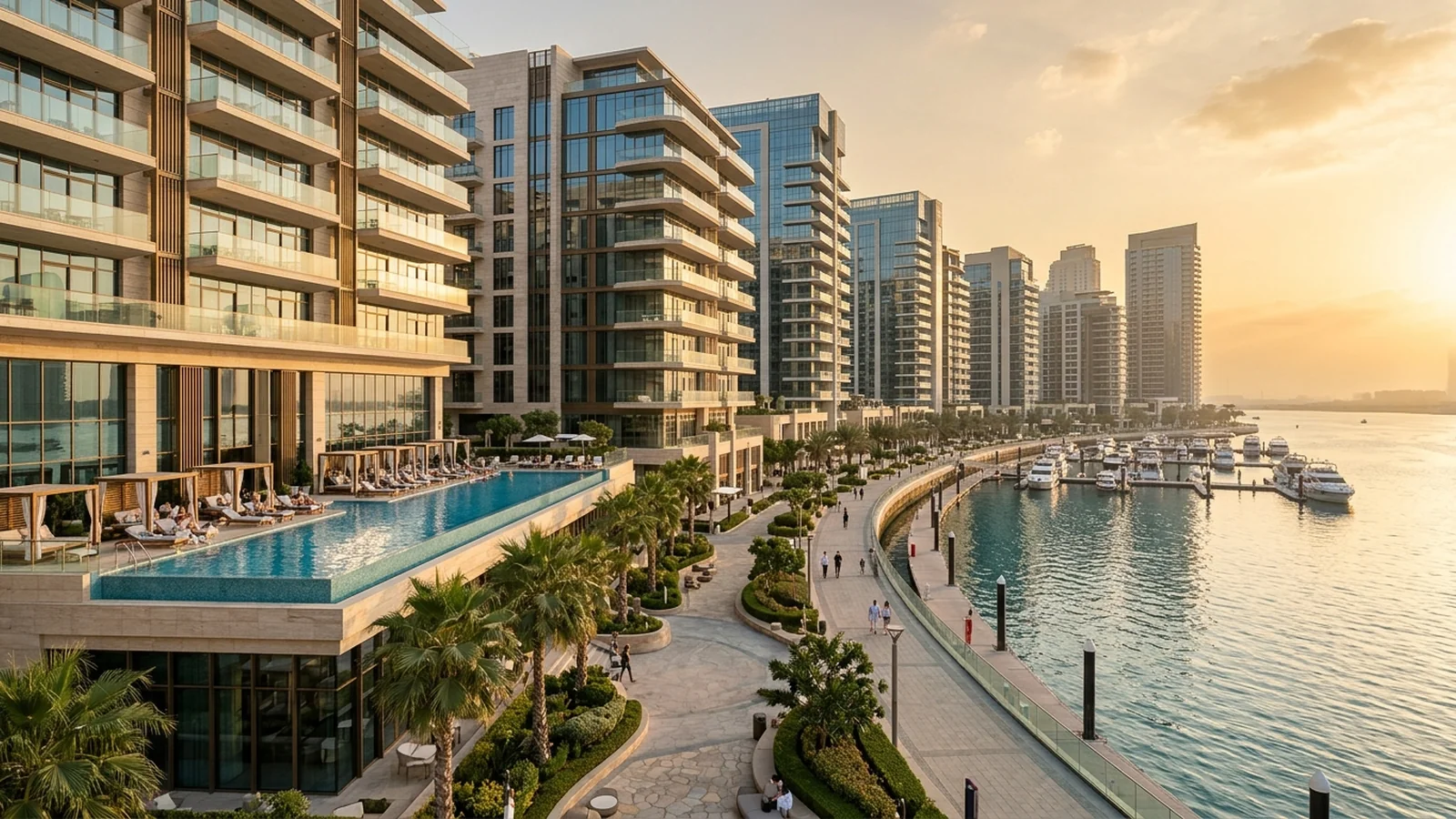
- Hotel Accommodation Demand: Hotels absorb overnight fluctuations most directly. Lower ten-month arrivals (9.68 million vs. 15.70 million in 2025) tighten pressure on room occupancy and daily rates, even during stronger individual months.
- Hospitality and Branded Residences: Buyers considering serviced or branded residences in Dubai typically prioritise lock-and-leave convenience and building standards, though end-user demand matters more when short-stay yields soften.
- Holiday Homes and Short-Term Rentals: Licensed holiday homes compete with hotels for leisure and business travellers, a trade-off explored in our property passive income guide. Slower arrival periods widen vacancy gaps and rate competition.
- Retail, Dining, and Entertainment Hubs: Tourist spending complements resident footfall across Sheikh Zayed Road (E11), Downtown Dubai, and coastal promenades.
- Residential Demand in Connected Districts: Hospitality, aviation, events, and regional business activity sustain baseline annual leasing demand across central urban corridors.
How Different Dubai Property Types Respond to Tourism Shifts
Property segments vary in exposure to an ~38.3% annual visitor drop or an autumn pickup like October’s 1.15 million total.
1. Hotel and Hospitality-Linked Properties
Serviced hotel apartments track tourism occupancy most closely. Because management fees and furniture reserves continue in slower periods, buyers should model conservative payout scenarios across softer years.
2. Licensed Holiday Homes and Short-Term Rental Apartments
Furnished marina, landmark, and beachfront units licensed with DET capture seasonal event rates, but net yields depend heavily on operator commissions, utilities, furnishing costs, platform competition, and slower annual arrival windows.
3. Branded Residences
Hospitality-branded homes rely largely on international end-users and second-home buyers rather than nightly bookings alone, yet premium entry prices and higher annual service charges compress net rental returns.
4. Residential Properties in Established Visitor Destinations
Apartments in Downtown Dubai, Dubai Marina, Palm Jumeirah, and JBR draw both annual corporate tenants and short-stay visitors. Investors comparing districts in our best Dubai areas for rental income guide should monitor upcoming local handovers.
5. Properties Near Major Transport and Entertainment Infrastructure
Access to DXB Airport, Metro stations, business hubs, and beaches helps owners switch smoothly between annual leases and compliant holiday lets. Our infrastructure impact on property values analysis highlights why proven connectivity outlasts speculative fringes.
What Should Property Investors Consider Before Investing?
With Jan–Oct visitors shifting from 15.70 million (2025) to 9.68 million (2026), asset-level underwriting outweighs headline numbers. Verify eight fundamentals before buying:
| Due-Diligence Factor | Property-Level Verification Checklist |
|---|---|
| Purchase Price & Closing Costs | Benchmark price per sq ft against recent DLD sales and budget closing fees (4% DLD transfer fee, trustee fee, brokerage). |
| Location & Accessibility | Assess walkable Metro, beach, and retail access plus E11/E311 links rather than promotional drive times. |
| Existing & Planned Supply | Track nearby residential handovers and hotel openings competing for the same guest or tenant profile. |
| Realistic Occupancy Assumptions | Stress-test softer cycles like 2026 alongside autumn/winter peaks rather than annualising 2025 peak occupancy. |
| Management & Maintenance Costs | Factor in holiday-home operator fees, DEWA, district cooling, internet, cleaning, and furnishing upkeep. |
| DET Holiday-Home Licensing | Confirm owners-association rules and DET requirements for permits, classification standards, guest ID registration, and Tourism Dirham collection. |
| Service Charges & Net Yield | Check RERA Mollak service-charge schedules and compare annual vs. short-stay returns via our Dubai rental yields by area benchmarks. |
| Exit Strategy & Resale Liquidity | Ensure the layout appeals to long-term annual tenants and mortgaged buyers if short-stay yields narrow. |
Do Tourism Figures Automatically Dictate Dubai Property Prices?
No. Just as high arrival years do not automatically lift values everywhere, a single-year tourism decline does not automatically dictate residential property prices.
Values across Dubai depend mainly on housing supply deliveries, resident population, employment inflows, mortgage rates and loan-to-value rules, build quality, and global capital flows. Short-stay rental income tracks hospitality occupancy far more closely than capital values do.
Tourism figures therefore serve as contextual demand data—never a standalone valuation metric.
Dubai’s Tourism and Real Estate Outlook
Over the medium term, hospitality assets, airline connectivity, business events, and repeat-visit programmes like Dubai Access Club anchor Dubai’s service economy. However, the ~38.3% drop from Jan–Oct 2025 to Jan–Oct 2026 confirms that visitor demand is cyclical.
For investors, dual-use flexibility offers the strongest protection: properties that underwrite soundly on twelve-month residential leases—while remaining eligible for compliant holiday lets in busy seasons—weather tourism swings better than units priced purely on optimistic peak projections.
Dubai Tourism 2026: Frequently Asked Questions
How many international visitors did Dubai welcome in 2026 compared to 2025?
Official DET data shows Dubai welcomed 9.68 million international overnight visitors in January–October 2026, compared with 15.70 million in January–October 2025—an approximately 38.3% year-on-year decrease.
Does October 2026’s 1.15 million visitor figure mean annual tourism grew?
No. October 2026’s 1.15 million overnight visitors was the highest monthly figure since February 2026 and reflects a monthly rebound within autumn 2026, whereas cumulative Jan–Oct 2026 arrivals remained down ~38.3% year-on-year from 15.70 million in 2025.
Are DET visitor figures the same as Dubai airport passenger numbers?
No. DET counts international overnight visitors staying at least one night in Dubai. Airport figures cover all arriving, departing, and connecting transit passengers, including travellers who never enter or stay overnight.
Do property owners need a DET permit to rent a holiday home in Dubai?
Yes. Short-term holiday rentals in Dubai require an active DET permit, compliance with classification and safety rules, guest ID registration, and Tourism Dirham fee collection.
Do tourism fluctuations automatically dictate Dubai property prices or rental yields?
No. While tourism shifts influence hotel and short-stay occupancy, residential prices and net rental yields hinge on competing supply, purchase price, annual service charges, financing terms, and resident leasing demand.
Conclusion
Comparing January–October 2026 (9.68 million international overnight visitors) against January–October 2025 (15.70 million, a ~38.3% decrease) provides crucial balance alongside October’s 1.15 million monthly rebound. For real estate buyers, cyclical tourism swings underscore the need for conservative cash-flow testing.
Pairing verified DET data with district research, RERA service-charge checks, realistic occupancy budgets, and regulatory compliance remains the soundest investment discipline.
Evaluating Dubai Property Returns Beyond the Headlines?
Speak with our advisory team for comparable DLD sales records, RERA service-charge schedules, and net rental yield stress-testing across annual and short-stay strategies.
Speak With an IND Global Advisor →Official Sources & Advisory Note: Figures cite official DET City Briefing 2026 reporting, DET Tourism Performance Reports, the Government of Dubai Media Office, and WAM coverage for January–October 2025 (15.70 million) and January–October 2026 (9.68 million; October 2026: 1.15 million). Verify DET holiday-home rules and owners-association terms prior to purchase.